
Golden Retriever Puppy Biting: What’s Normal and How to Stop It
About the health information here: it comes from vet groups and vet schools, but we’re dog owners, not vets, so for anything about your own puppy’s health or behavior, check with your vet.
The short answer: Biting is normal golden puppy play, and it usually eases as the adult teeth finish coming in, often between 4 and 6 months. Teach a soft mouth, end play when teeth hit skin, swap in a toy, and put an overtired puppy down for a nap. Never hit or yell. Get a trainer if it isn’t easing by 6 months.
In this guide
- Your golden puppy keeps biting you: here’s what’s going on
- Do golden retriever puppies bite a lot?
- Is your puppy overtired? The evening witching hour
- What to do when your golden retriever puppy bites
- How to stop a golden retriever puppy from biting
- What should you never do?
- How do you keep kids from getting bitten?
- Golden retriever puppy jumping and biting: what helps?
- When does golden retriever puppy biting stop?
- Will your golden stay mouthy as an adult?
- Play biting or something more? When to get help
- FAQs
- Bottom line
Your golden puppy keeps biting you: here’s what’s going on
Your puppy isn’t being mean. They’re playing with you the only way they know how.
Vet behaviorists who write for VCA say nipping and mouthing in young dogs is mostly social play, not teething. Teething shows up more as chewing on household things.
Littermates also teach each other how hard is too hard. When one puppy bites too hard, the other yelps and stops playing. That’s how puppies learn bite inhibition, the skill of controlling the force of a bite. Your puppy now needs to learn the same lesson about people, whose skin is far more sensitive.
This matters for life. Any dog might put their mouth on someone one day, like a vet when they’re in pain. If they’ve learned a soft mouth, the outcome will likely be harmless.
Do golden retriever puppies bite a lot?
Yes, and it often catches owners off guard. Goldens have a reputation as gentle family dogs, but as one owner on Reddit’s r/goldenretrievers put it, “nothing prepares you for the level of biting.” Golden owners even have names for it: the land shark, the carpet shark phase, the velociraptor phase.
There’s a reason. Retrievers were bred to find birds and carry them back undamaged, and VCA’s vets name retrievers as a breed known for being “mouthy.” The breeders behind an AKC golden puppy timeline say goldens were created to carry things in their mouths, and from 2 to 6 months, mouthiness is front and center.
So a mouthy golden puppy isn’t a broken puppy. It’s a golden.
Get the free Golden Puppy 90-Day Plan: the before-day-one shopping list, a daily schedule at 8, 10 and 12 weeks with the naps built in, and a week-by-week checklist for your first three months.
Is your puppy overtired? The evening witching hour
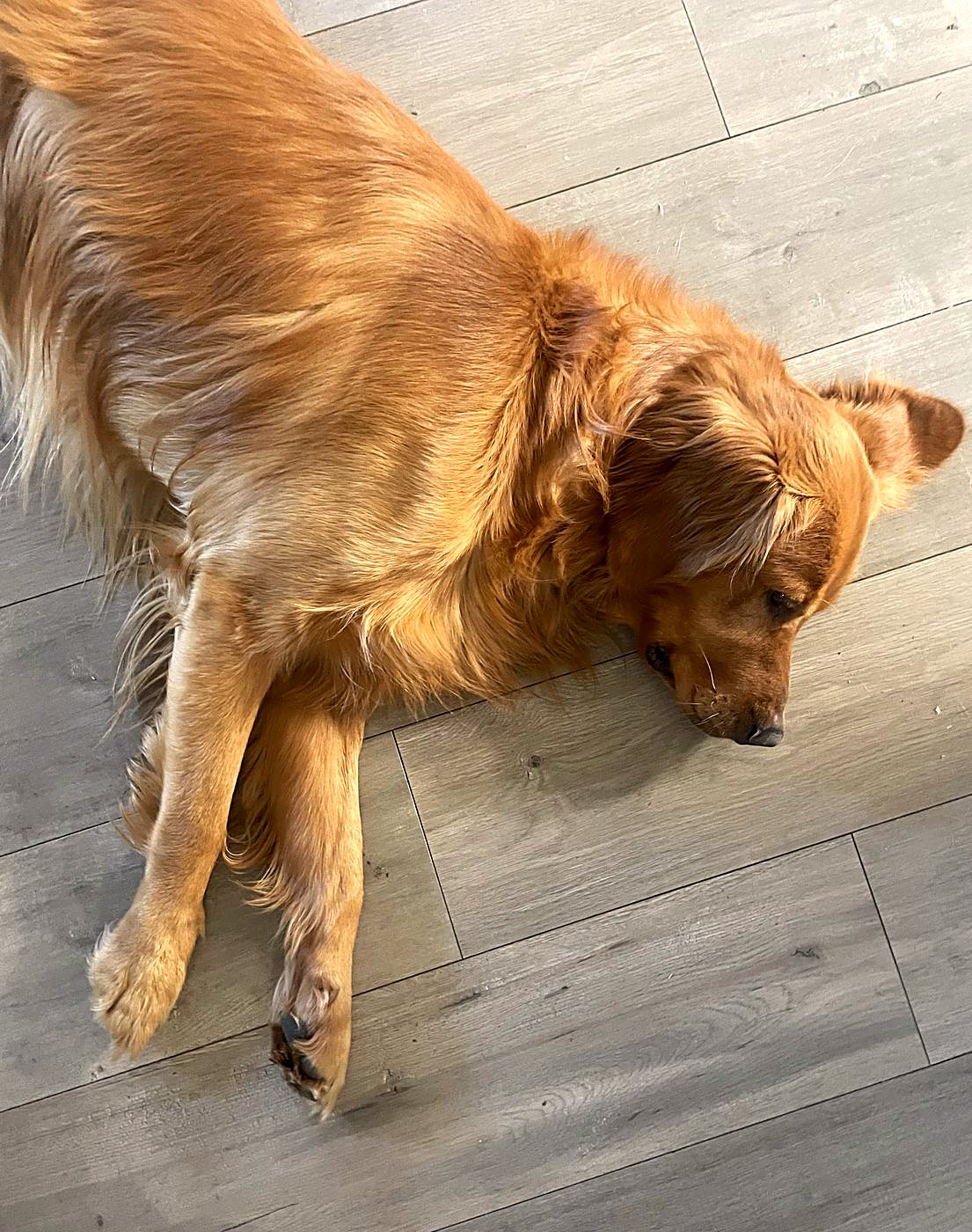
If your puppy turns into a land shark every evening, owners have a name for it: the witching hour. The AKC says overtired puppies are often mouthier puppies. Like toddlers, they get cranky and impulsive without enough sleep.
Puppies need 18 to 20 hours of sleep a day. They may nap every hour or so, for 30 minutes to two hours at a time. Plan the day so active time is followed by quiet time.
Evening zoomies are normal too, especially after a day in the crate or too little exercise.
Before you train anything, run this quick check, straight from the AKC’s list of reasons a puppy bites:
-
Nap? Has your puppy been awake about an hour? Put them somewhere quiet, like the crate or pen, for a nap.
-
Potty? A potty break might be all they need.
-
Food or water? Your puppy may just be hungry or thirsty.
-
Energy? Still biting after several toy swaps? Your puppy may need to burn off energy with yard play, a food puzzle or a short training session.
Owners call these planned rests enforced naps, and the AKC suggests scheduling them daily. Our golden retriever puppy schedule: a sample day at 8, 10 and 12 weeks builds one into every awake window.
What to do when your golden retriever puppy bites
Here’s what to do in the moment. Keep it calm and boring.
-
Stop the fun. If teeth touch skin during play, playtime’s over. The AKC says no exceptions.
-
Go still. Let your hand go limp instead of jerking it away. Pulling back makes your hand a fun thing to chase.
-
Step away for a few seconds. The ASPCA suggests ignoring your puppy for 10 to 20 seconds, or getting up and moving away if they keep mouthing.
-
Come back and offer a toy. Gentle play continues, painful play stops. That’s the whole lesson.
-
Calm down in the crate if needed. If your puppy can’t settle, put them gently in their crate for a few minutes with a small treat. It’s nap time, not punishment (more in how to crate train a golden retriever puppy (including the first nights)).
A tip from trainer Kathy Santo, writing for the AKC: turn around and tuck your hands into your armpits. It’s a calming signal that takes away the attention your puppy wanted.
One snag: VCA’s vets note that carrying a puppy away can feel like more play. The ASPCA suggests a light leash dragging on the floor while you supervise, so you can calmly lead them instead.
Does the yelp method work?
It depends on the puppy. The ASPCA recommends a high-pitched yelp, like a littermate would make, then a limp hand. The AKC says the same yelp gets some puppies even more worked up.
Try it. If your puppy backs off, praise them. If they come back harder, skip the yelp and just step away.
How to stop a golden retriever puppy from biting
The ASPCA lays out the plan in two stages.
Stage 1: a soft mouth. Only respond to the hardest bites at first. When those stop, respond to medium bites, then lighter ones, until your puppy mouths with almost no pressure.
Stage 2: no teeth on skin. Once bites are gentle, every touch of teeth on skin gets a time-out. The ASPCA suggests 30 to 60 seconds, leaving the room if your puppy follows and keeps nipping (puppy-proof it first).
Through both stages:
-
Keep a toy in every room. Offer it the second teeth come out, and have one ready when the crate door opens.
-
Play without hands. Fetch and tug, not wrestling. VCA’s vets say tug is fine as long as you start and end the game and stop the moment teeth touch skin or clothing.
-
Feed treats while you pet. If petting sets off the teeth, feed small treats from your other hand.
-
Ankle biter? Stop moving your feet, then wave a tug toy. When your puppy grabs it, start walking again.
-
Ask for a sit. A sit earns play, a treat or a toy. Biting earns nothing.
-
Get the whole family on the same rules. VCA’s vets say mixed messages confuse puppies.
-
Line up safe dog friends. Play with other puppies and friendly, vaccinated adult dogs burns energy that would otherwise go into your hands. A puppy class helps too.
Teething makes this harder. The AKC suggests rubber teething toys you can freeze and edible teething rings, with supervision. VCA’s vets add a good rule: “don’t let your dog chew anything that won’t bend.”
What should you never do?
Skip anything that hurts or scares your puppy.
-
No hitting, slapping or nose taps. The ASPCA says slapping can make puppies bite harder, fear you and even turn aggressive.
-
No scruff shakes, “alpha rolls,” squirt bottles or shaker cans. The American Veterinary Society of Animal Behavior (AVSAB) lists all of these as intimidation to avoid.
-
No yelling. The AKC says yelling can work as a reward, because biting got a big reaction.
-
No rough play with hands. Wrestling and waving fingers in your puppy’s face teach them hands are toys.
AVSAB recommends reward-based training for all dogs.
How do you keep kids from getting bitten?
VCA’s vets say children are the most vulnerable. A child’s reaction often isn’t quick or clear enough, so the puppy reads it as an invitation to more chase. The answer is adult supervision every time.
A simple script for kids:
-
Stop and be boring. If the puppy nips, stop moving, tuck your hands into your armpits and turn around.
-
No running and no shrieking. Move slowly and calmly. Never chase the puppy.
-
Get a grown-up. The grown-up moves the puppy to the crate or pen with a chew toy.
A few house rules from the AKC: don’t bother the puppy in their crate or while they’re eating, sleeping or chewing, never pull ears or tails, and a growl always means back away.
No “I don’t mind” rough play, either: VCA’s vets say playing on after a bite rewards it. When you can’t watch, use the crate or a child-free area with a chew toy.
Golden retriever puppy jumping and biting: what helps?
Jumping and biting often come together at greetings. The AKC explains that any attention rewards jumping, even yelling or pushing your puppy away, which can feel like a wrestling game.
-
Four on the floor. Toss a few treats on the floor before someone greets your puppy, so they’re eating, not jumping, while they’re petted. Use fewer treats over time.
-
Sit for greetings. Approach when your puppy sits. If they stand up or jump, turn and walk away.
-
Manage the door. Use a gate, a leash or a toy tossed away from the door while guests come in. Ask guests to ignore jumping.
When does golden retriever puppy biting stop?
“When Does Puppy Biting End? Does it ever end?” That’s an owner on r/goldenretrievers, and you’re far from the only one asking.
Here’s the usual arc, pulled from VCA and the AKC:
-
8 to 12 weeks: a mouth full of 28 sharp baby teeth. Biting is play. This is when to start teaching a soft mouth.
-
Around 12 weeks: baby teeth start falling out as adult teeth come in.
-
4 to 6 months: the AKC says most puppies get much less mouthy as they finish teething and mature. By about 6 months, all adult teeth are in.
-
6 months: if biting hasn’t eased with steady training, the AKC suggests an experienced trainer or behavior specialist.
-
8 to 10 months: the AKC describes a second chewing phase as adult teeth settle in the jaw. Keep chew toys handy.
-
Around 18 months: VCA’s vets say heavy chewing tends to ease, though some chewing lasts for life.
Expect some backsliding in teenage dirtbag mode too. The AKC says adolescence can run from about 8 months to 2 years, when dogs seem to forget their training. Keep the same rules.
If your puppy still has baby teeth after 6 months, or you notice anything unusual in their mouth, check with your vet.
Will your golden stay mouthy as an adult?
Probably, in a good way. Puppy biting should fade. The urge to hold things doesn’t.
Goldens are known for carrying sticks, toys, clothing and whatever isn’t tied down, and for a soft mouth gentle enough to carry game undamaged. The AKC also notes they mature slowly and stay playful into adulthood. The breeders on the AKC timeline suggest channeling it with cues like leave it, drop it, give and go fetch.
So an adult golden greeting you with a shoe in their mouth isn’t puppy biting. It’s a retriever doing what they were bred for.
Play biting or something more? When to get help
The AKC’s chief vet says play biting doesn’t mean your puppy is vicious. Still, know the difference.
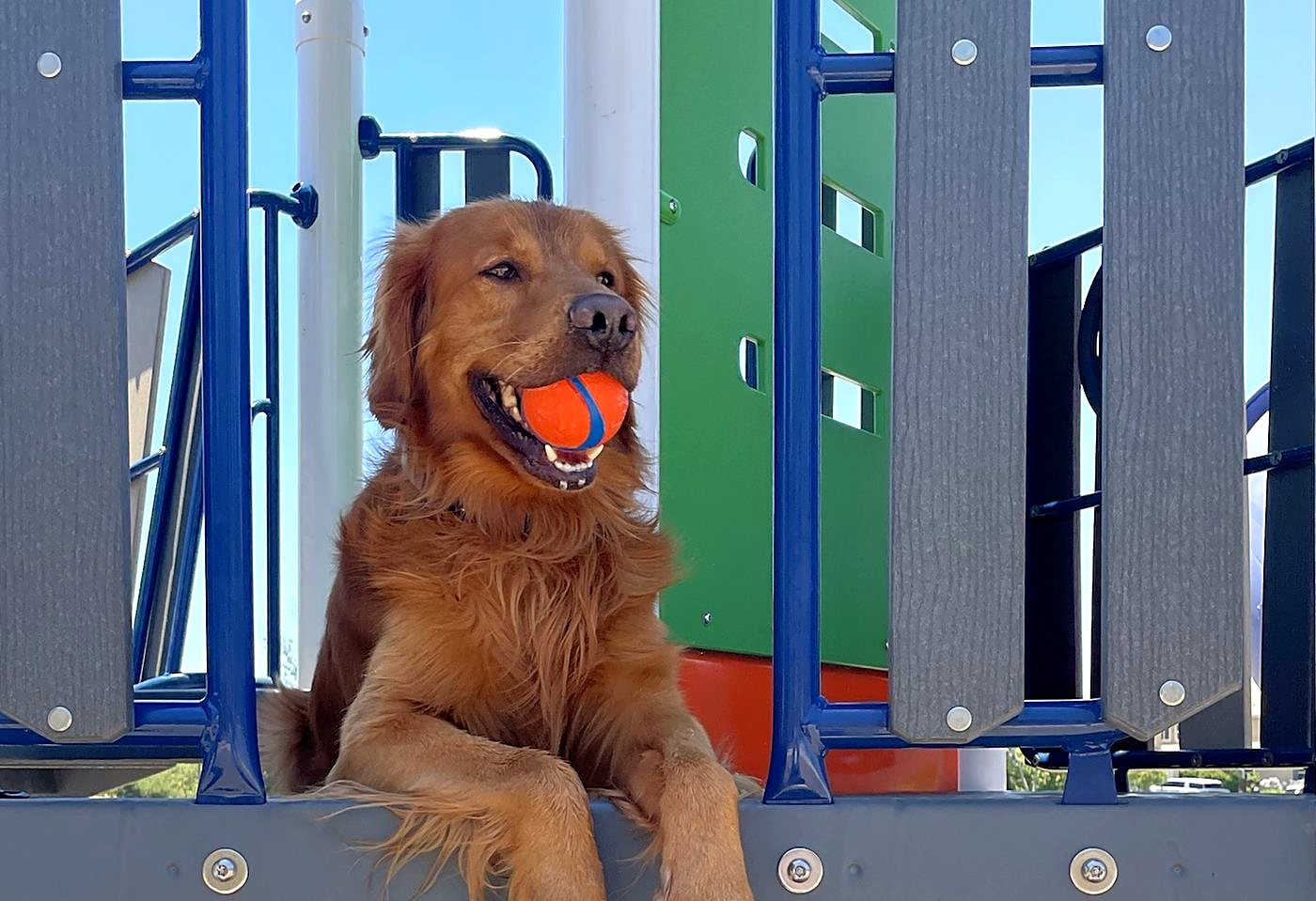
Play looks like: a loose, wiggly body and a relaxed face.
A problem looks like: a stiff or frozen body, lips pulled back to show teeth, growling, and bites that hurt far more than usual. The ASPCA calls these tantrums. They often happen when a puppy is being held or handled, or when play boils over.
If this happens while you’re holding your puppy, the ASPCA says don’t yelp. Stay calm, hold them gently until they stop struggling, then let go. Then call a professional, because repeated frustration biting isn’t something puppies simply grow out of.
Get help if:
-
Biting hasn’t eased by 6 months, even with steady training.
-
Bites are unusually intense or cause injury.
-
Your puppy bites out of fear, or you see the warning signs above.
For normal mouthing, a Certified Professional Dog Trainer (CPDT) is a good start. For fear or aggression, the ASPCA suggests a certified applied animal behaviorist or a board-certified veterinary behaviorist.
Pain can cause biting too, even in gentle dogs, and the ASPCA says to rule out medical problems with a vet first. If your puppy’s biting changes suddenly, or they bite when you touch a certain spot, check with your vet.
FAQs
Should I let my puppy mouth my hands gently?
Sources split. The ASPCA allows gentle mouthing at first so puppies learn how hard is too hard. The AKC says it’s best to teach that skin is never a chew toy. Either way, the goal is no teeth on people.
Do bitter sprays work?
They can help when time-outs don’t. The ASPCA suggests spraying the spots your puppy targets before you interact, then praising them when they let go. Keep it up for at least two weeks.
Bottom line
Golden puppies bite because they’re playing, teething and bred to use their mouths. Teach a soft mouth, end play when teeth touch skin, give plenty of toys and naps, and supervise kids. Skip punishment, and call a trainer if biting hasn’t eased by 6 months.
Get the free Golden Puppy 90-Day Plan: a printable daily schedule at 8, 10 and 12 weeks with naps built in, the before-day-one shopping list, and a week-by-week checklist for your first three months.
Keep reading: golden retriever puppy schedule: a sample day at 8, 10 and 12 weeks · how to crate train a golden retriever puppy (including the first nights) · golden retriever puppy checklist: what to buy before day one
Sources
-
American Kennel Club, “How to Stop Puppy Biting and Train Bite Inhibition”: https://www.akc.org/expert-advice/training/stop-puppy-biting/
-
American Kennel Club, “How to Stop Puppy Mouthing and Teach Better Bite Habits”: https://www.akc.org/expert-advice/training/puppy-mouthing-expert-tips/
-
American Kennel Club, “Puppy Teething and Nipping: A Survival Guide”: https://www.akc.org/expert-advice/health/puppy-teething-and-nipping/
-
American Kennel Club, “How Do I Stop My Puppy From Biting My Legs and Clothes?”: https://www.akc.org/expert-advice/training/aggressive-puppy-biting-ask-our-trainers/
-
American Kennel Club, “Why Does My Puppy Go Wild at Night?”: https://www.akc.org/expert-advice/training/why-does-my-puppy-go-wild-at-night/
-
American Kennel Club, “How to Make Sure Your Puppy Gets Enough Sleep”: https://www.akc.org/expert-advice/health/how-much-do-puppies-sleep/
-
American Kennel Club, “How to Help Your Dog Love Children”: https://www.akc.org/expert-advice/dog-care/articles/introducing-kids-to-a-new-puppy/
-
American Kennel Club, “How to Stop Your Dog From Jumping Up on People”: https://www.akc.org/expert-advice/training/how-to-stop-your-dog-from-jumping-up-on-people/
-
American Kennel Club, “Golden Retriever Puppy Training Timeline: From 8 Weeks to 2 Years”: https://www.akc.org/expert-advice/dog-breeds/golden-retriever-puppy-training-timeline/
-
American Kennel Club, “Your Adolescent Puppy and Changes to Expect”: https://www.akc.org/expert-advice/health/adolescent-puppy-changes/
-
American Kennel Club, “Facts About the Golden Retriever That You May Not Know”: https://www.akc.org/expert-advice/lifestyle/fun-facts-golden-retriever/
-
American Kennel Club, “Get to Know the Retriever Breeds of the Sporting Group”: https://www.akc.org/expert-advice/dog-breeds/meet-retriever-breeds/
-
ASPCA, “Mouthing, Nipping and Biting in Puppies”: https://www.aspca.org/pet-care/dog-care/common-dog-behavior-issues/mouthing-nipping-and-biting-puppies
-
ASPCA, “Aggression”: https://www.aspca.org/pet-care/dog-care/common-dog-behavior-issues/aggression
-
VCA Animal Hospitals, “Play Biting in Puppies” (Debra Horwitz, DVM, DACVB, and Gary Landsberg, DVM, DACVB): https://vcahospitals.com/know-your-pet/play-biting-in-puppies
-
VCA Animal Hospitals, “Teeth, Teething and Chewing in Puppies”: https://vcahospitals.com/know-your-pet/teeth-teething-and-chewing-in-puppies
-
VCA Animal Hospitals, “How to Handle Puppy Biting”: https://vcahospitals.com/pediatric/puppy/behavior-training/how-to-deal-with-puppy-biting
-
American Veterinary Society of Animal Behavior, “Position Statement on Humane Dog Training” (2021): https://avsab.org/wp-content/uploads/2021/08/AVSAB-Humane-Dog-Training-Position-Statement-2021.pdf
-
Owner quote, r/goldenretrievers, “When Does Puppy Biting End? Does it ever end?”: https://www.reddit.com/r/goldenretrievers/comments/1otmqry/
-
Owner quote, r/goldenretrievers, puppy blues post (“nothing prepares you for the level of biting”): https://redd.it/1qfpm8f
-
Golden Retriever Forum, “Witching Hour” thread: https://www.goldenretrieverforum.com/threads/witching-hour.513761/
