Puppy Socialization Checklist for Your Golden (Free Printable)
About the health information here: it comes from vet groups and vet schools, but we’re dog owners, not vets, so for anything about your own puppy’s health, check with your vet.
The short answer: Start the day your golden comes home. Vet sources put the prime socialization window at about 3 to 12 or 14 weeks, and vet behaviorists say it shouldn’t wait for the last vaccine. Give your puppy short, happy experiences with people, handling, sounds, surfaces, places and healthy, vaccinated dogs, and back off whenever your puppy looks scared.
In this guide
- What is puppy socialization?
- When is the puppy socialization window?
- Can you socialize a puppy before vaccines are done?
- How do you keep each experience positive?
- What’s on a puppy socialization checklist?
- How many new experiences does a puppy need?
- What if your puppy is scared, or already past 14 weeks?
- FAQs
- Bottom line
Print the checklist (PDF, 2 pages, free, no signup)
Goldens are bred to be friendly. The breed standard calls for a “friendly, reliable and trustworthy” temperament. But genes are only part of it: AAHA’s guidelines say every dog is a product of its genetics and its experiences, and that puppies learn best how to handle people, places and other animals during early sensitive periods.
This page is your plan for those weeks: what to expose your puppy to, how to do it safely before the shots are done, and how to tell whether each try went well.
What is puppy socialization?
It’s giving your puppy lots of good experiences with new people, places, animals and things while they’re still wired to accept them. Ohio State’s vet school sums it up as people, locations, animals and novelty, without causing fear.
Exposure alone isn’t the goal. Ohio State says a neutral meeting may not be enough, so pair new things with treats and fun. As one trainer quoted by the AKC put it, socialization means “introducing new situations and making them safe, positive, confidence-building experiences.”
It matters. Behavior problems, not infectious disease, are the number one cause of death for dogs under 3, according to the American Veterinary Society of Animal Behavior (AVSAB).
When is the puppy socialization window?
Roughly 3 weeks to 12 or 14 weeks old. Sources draw the edges a little differently:
-
AVSAB: the first three months of life
-
Ohio State’s vet school: 3 weeks to 12, possibly 14, weeks
-
UC Davis’s vet school: about 3 to 14 weeks
-
ASPCA: most accepting from 3 to 12 weeks, harder each week from 12 to 18 weeks, and extremely difficult after that
AAHA’s guidelines add that these periods fade in and out gradually rather than slamming shut, and that dogs keep learning all their lives.
Puppies shouldn’t leave their litter before 8 weeks, per AAHA, so by the time your golden comes home, about half the window has passed. That leaves roughly 4 to 6 weeks, by our math.
Many puppies also hit a fear period at 8 to 10 weeks, right when the first vet visits happen. Ohio State warns that one bad experience then can last a lifetime, so bring treats to every vet visit.
Get the free Golden Puppy 90-Day Plan: a shopping list, a daily schedule at 8, 10 and 12 weeks, and a week-by-week checklist for your first three months.
Can you socialize a puppy before vaccines are done?
Yes, carefully. AVSAB says socializing puppies before they’re fully vaccinated should be the standard of care. AAHA’s guidelines say there’s no medical reason to delay puppy classes or social outings, as long as you avoid sick animals, keep things clean and feed a good diet.
One soon-to-be golden owner on r/goldenretrievers put the worry this way: “I don’t want to expose him to risks if he’s not fully vaccinated, but I don’t want to keep him cooped up since I also read that these first weeks are integral for socializing them to dogs and people.”
Here’s the timing problem. Puppies need at least three doses of the core combination vaccine between 6 and 16 weeks, and full protection comes at about 16 to 20 weeks, according to Ohio State. That’s after the window. (See where the vet visits fall in golden retriever puppy schedule: a sample day at 8, 10 and 12 weeks.)
The disease risk is real but small with precautions. In a UC Davis study, none of 279 puppies who’d had at least one vaccine and went to socialization classes got parvo, and vaccinated puppies in classes were at no greater risk than those who skipped them.
How to keep it safe:
-
Skip dog parks, pet stores and other spots unknown dogs use until your vet says your puppy’s ready.
-
Only meet dogs you know. They should be healthy, vaccinated, friendly with puppies, and not spending time around unknown dogs.
-
Keep paws off unknown ground. Carry your puppy, or use a sling, stroller, mat or blanket where lots of dogs go. Stick to sidewalks rather than grass other dogs use.
-
Ask people to wash their hands, and visitors who’ve been at a shelter or dog park to change clothes and shoes first.
-
Pick a careful puppy class. Classes can start at 7 to 8 weeks, after at least one set of vaccines 7 or more days before class and a first deworming. Look for indoor, easy-to-clean floors and a class just for puppies under 4 months.
Not every vet agrees on classes. A vet quoted by the AKC prefers waiting until the vaccine series is done, and an AKC breeder article suggests known dogs and safe outdoor spots after at least two rounds of shots, around 11 to 12 weeks. Ask your vet what’s safe where you live.
How do you keep each experience positive?
Go at your puppy’s pace, keep it short, and pair every new thing with treats. If your puppy looks worried, back off.
-
Let your puppy approach. Start at a distance and let them come to new things on their own.
-
Sight first, then sound, then movement. With a vacuum, let your puppy see it switched off, then hear it, then watch it move.
-
Carry small treats everywhere, and hand some to new people to offer. Our golden retriever puppy checklist: what to buy before day one has training treats on the day-one list.
-
Keep it short. The AKC suggests early puppy parties of about half an hour.
-
Never force it. AAHA warns that pushing a scared puppy makes fear worse, not better.
-
No punishment. Don’t let anyone roll your puppy over, hold them down, yell or jerk the leash.
Watch your puppy, not the crowd. UC Davis lists a tucked tail, licking lips, yawning, shaking and ears back as stress signs. The AKC adds freezing, whale eye (the whites of the eyes showing) and ignoring treats your puppy would usually grab. If you see them, add distance or end the session, then make it easier next time.
On our printable, you mark each try one of three ways:
-
✓ Happy: relaxed, comes over on their own, explores, takes treats. Do more.
-
~ Unsure: hangs back, head or tail low, stretches to grab a treat while leaning away. Try again with more distance, less noise or a shorter visit.
-
✗ Scared: freezes, tries to leave, shows whale eye, trembles or won’t take treats. Stop, and make it much easier next time.
What’s on a puppy socialization checklist?
Six groups: people, handling, other animals, sounds, surfaces, and places and things. Focus on what fits the life your golden will lead, and repeat anything your puppy finds hard.
Print the checklist (PDF, 2 pages, free, no signup)
People
-
Men, women, teens and older adults
-
Toddlers and school-age kids, always supervised
-
Men with beards; people in hats, helmets, glasses or uniforms
-
People using wheelchairs, walkers or crutches
-
People on bikes, skateboards or scooters
-
People carrying umbrellas, bags or boxes
-
Delivery people and visitors at the door
-
The vet team and a groomer
Ask your puppy to sit before each greeting. Ohio State notes that jumping up stops being cute as a puppy grows, and the breed standard calls for 55 to 75 pounds in an adult golden.
Handling
-
Paws, pads and nails
-
Ears, inside and out
-
A look in the mouth, gently and briefly (AAHA notes mouths can be sore while baby teeth fall out)
-
Belly and tail
-
A gentle hold, then a treat
-
A hand on the collar, then a treat (the AKC calls this the “Gotcha” game)
-
Collar and leash on and off
-
Brush, bath and towel
-
A hair dryer on the low or cool setting
-
One nail trimmed at a time
-
A toothbrush, once adult teeth are in
Do it when your puppy’s calm and tired, and show each tool before it touches them. A breeder’s grooming guide on the GRCA’s site suggests bathing and drying a golden puppy every few weeks from about 7 weeks old.
Other animals
-
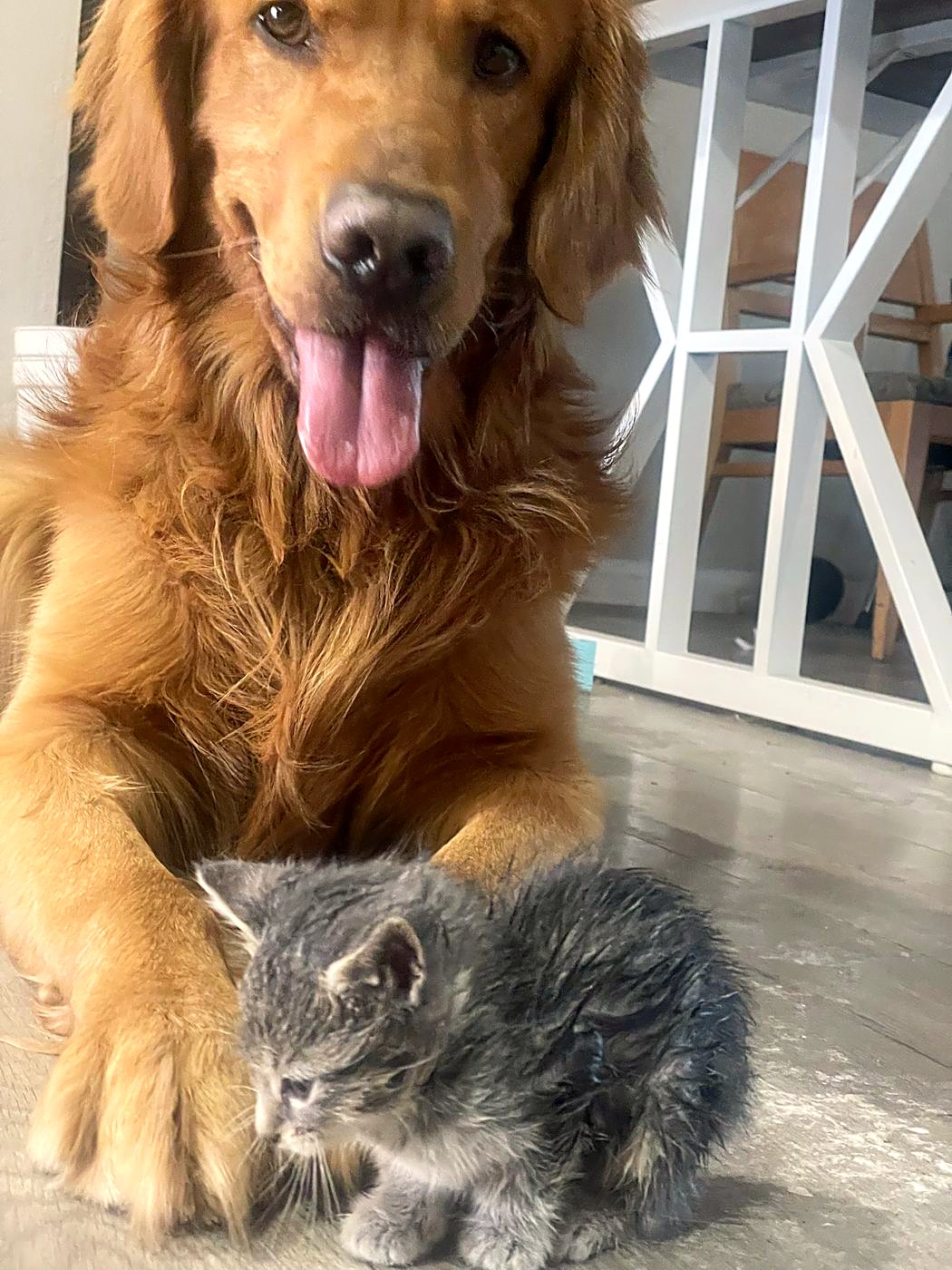
A calm, vaccinated adult dog who plays nicely but won’t put up with too much mouthing
-
Healthy, vaccinated puppies
-
A dog-friendly cat
-
Farm animals, seen from the car
-
Your own other pets
End any meeting where the other animal avoids your puppy, growls or plays too rough. Puppy play also teaches bite control (more in golden retriever puppy biting: what’s normal and how to stop it).
Sounds
-
Vacuum, hair dryer and washing machine
-
Phone ringtones, a radio and kids playing
-
Traffic, buses, motorcycles and garbage trucks
-
Recordings of thunder and barking dogs
-
Lawn mowers and power tools
Start quiet and far away, pair the sound with treats, and turn it up over days.
Surfaces
-
Grass, leaves and sand
-
Gravel and concrete
-
Slick floors like tile, wood and linoleum
-
Carpet and rugs
-
Metal grates and manhole covers
-
Stairs
-
Bumpy or uneven ground
-
Mud and puddles
-
An exam table (a towel on top helps)
Places and things
-
Car rides that end somewhere fun, not just at the vet
-
Drive-throughs and car washes
-
Friends’ homes
-
New neighborhoods: city, suburb and country
-
A bench near a school or a sports field, on your lap or a blanket
-
The groomer, early, even before a full groom is needed
-
Crate naps and short stretches of alone time
-
Strollers, wagons and wheelchairs rolling by
-
Umbrellas and balloons
-
Elevators and automatic doors
-
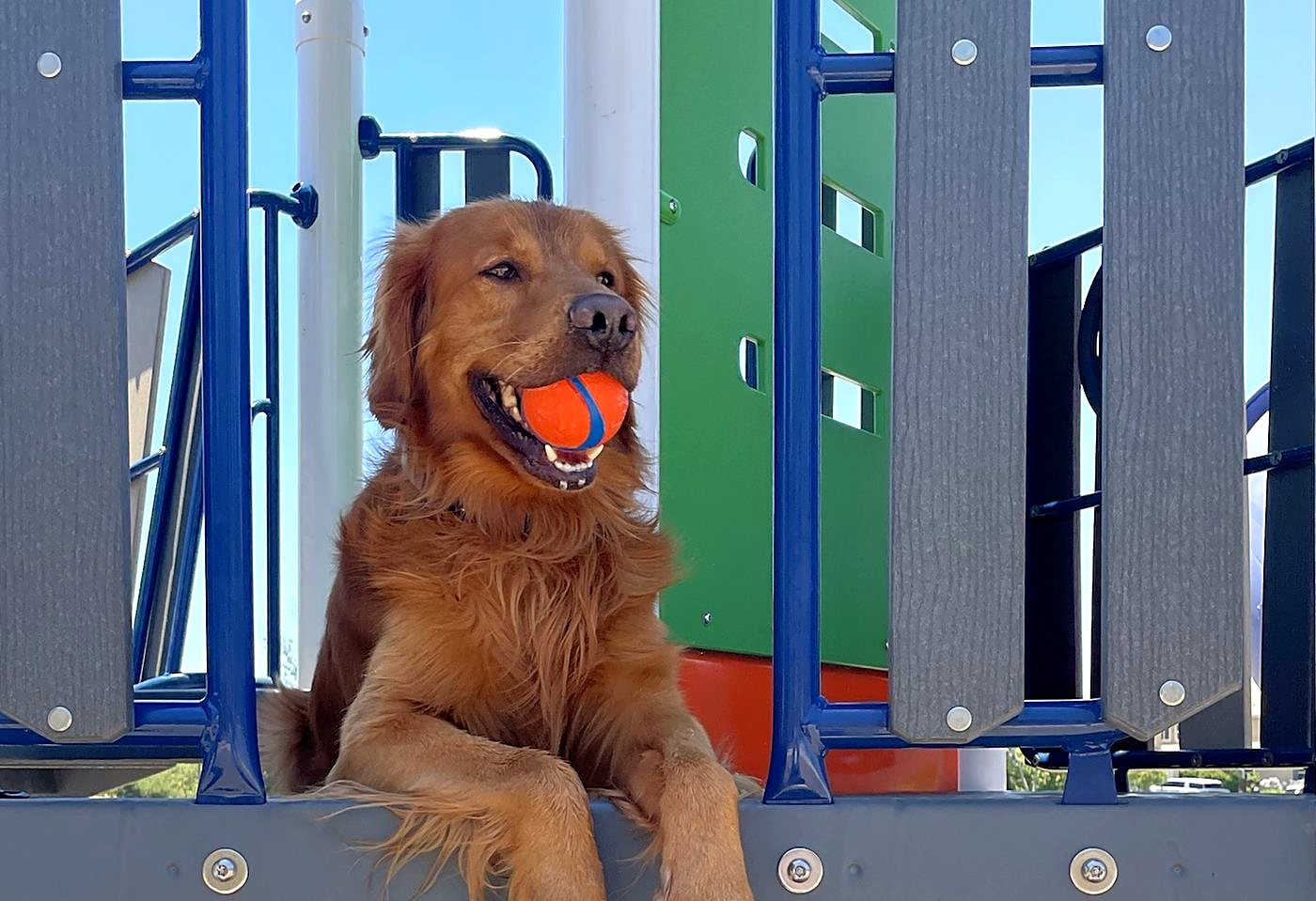
Rolling and bouncing balls
-
Off-season things: snow shovels, winter coats, holiday decorations, a running hose
How many new experiences does a puppy need?
Sources don’t agree on a number. UC Davis’s vet school suggests aiming for 90 different happy situations by 14 weeks, and Ohio State passes on Dr. Ian Dunbar’s goal of 100 people before 16 weeks.
Don’t chase the number. A trainer quoted by the AKC would rather build a puppy’s confidence than flood them with people, noises and experiences, and she passes on a mentor’s rule: “Absence of one bad experience far outweighs 100 good experiences!”
What if your puppy is scared, or already past 14 weeks?
Keep going, just slower. UC Davis says socialization can happen at any age; it’s just a slower process after 14 weeks.
Ohio State says fear and avoidance in social settings aren’t normal for healthy puppies. If your puppy runs from people or acts fearful even when things are calm, talk to your vet. AVSAB also advises veterinary guidance for puppies showing fear, and AAHA says there’s no evidence pets grow out of behavior problems.
Keep it up through the teenage months, too. Ohio State says early gains can fade fast without practice and suggests a vet check of behavior and health at 8 to 10 months.
FAQs
Can my puppy meet my vaccinated dog?
Usually, yes. The AKC says puppies can meet known dogs that are vaccinated, healthy and not exposed to unvaccinated dogs, ideally at home. Supervise, and step in if the older dog avoids, growls or plays too rough.
Is 16 weeks too late to socialize a puppy?
No. It’s slower after about 14 weeks, but dogs keep learning all their lives. Go gently, and ask your vet if your puppy seems fearful.
Bottom line
Socialize from the first day, keep each experience short and happy, and let your puppy set the pace. Guard against disease by skipping places unknown dogs use, not by staying home. Print the checklist, mark each try, and check with your vet about what’s safe where you live.
Get the free Golden Puppy 90-Day Plan: a shopping list, a daily schedule at 8, 10 and 12 weeks, and a week-by-week checklist for your first three months.
Keep reading: golden retriever puppy schedule: a sample day at 8, 10 and 12 weeks · golden retriever puppy checklist: what to buy before day one · golden retriever puppy biting: what’s normal and how to stop it
Sources
-
American Veterinary Society of Animal Behavior, Position Statement on Puppy Socialization: https://avsab.org/wp-content/uploads/2024/12/Puppy-Socialization-Position-Statement-FINAL.pdf
-
AAHA, 2019 Canine Life Stage Guidelines, Behavior: https://www.aaha.org/resources/life-stage-canine-2019/behavior/
-
AAHA, 2019 Canine Life Stage Guidelines, puppy checklist: https://www.aaha.org/wp-content/uploads/globalassets/02-guidelines/canine-life-stage-2019/caninelifestage_checklists_puppy.pdf
-
AAHA, 2015 Canine and Feline Behavior Management Guidelines, Age and behavior: https://aaha.org/aaha-guidelines/behavior-management/age-and-behavior
-
Herron ME and Stull JW, “Balancing Puppy Socialization with Infectious Disease Prevention,” The Ohio State University College of Veterinary Medicine: https://vet.osu.edu/sites/default/files/documents/balancing-puppy-socialization-with-infectious-disease-prevention.pdf
-
Stull J and Herron M, “Socialization and Infectious Disease Prevention: You CAN Have Both!” checklist, The Ohio State University College of Veterinary Medicine (2025): https://vet.osu.edu/sites/default/files/documents/puppy-socialization-and-id-prevention-checklist_out.pdf
-
The Ohio State University Indoor Pet Initiative, Socialization: https://indoorpet.osu.edu/dogs/puppy/socialization
-
The Ohio State University Veterinary Medical Center, Behavior Guide for Your New Puppy: https://vmc.vet.osu.edu/resources/behavior-guide-your-new-puppy
-
UC Davis School of Veterinary Medicine, Puppy Socialization: https://healthtopics.vetmed.ucdavis.edu/health-topics/canine/puppy-socialization
-
Stepita ME, Bain MJ, Kass PH, “Frequency of CPV infection in vaccinated puppies that attended puppy socialization classes,” Journal of the American Animal Hospital Association (2013): https://pubmed.ncbi.nlm.nih.gov/23325595/
-
ASPCA, “Socializing Your Puppy” (ASPCApro): https://www.aspcapro.org/sites/default/files/2023-11/socializing-a-puppy.pdf
-
American Kennel Club, “When Can My Puppy Meet Other Dogs?”: https://www.akc.org/expert-advice/health/can-puppy-meet-dogs/
-
American Kennel Club, “Puppy Socialization and Preparing for New Homes: 8-12 Weeks”: https://www.akc.org/expert-advice/dog-breeding/puppy-socialization-starts-with-breeder-8-12-weeks/
-
American Kennel Club, An Owner’s Manual for Puppy Socialization: http://images.akc.org/pdf/ebook/Puppy_Socialization.pdf
-
American Kennel Club, “How to Socialize Your Dog From Home”: https://www.akc.org/expert-advice/training/socialize-puppy-times-social-distancing/
-
American Kennel Club, “Signs of Stress in Dogs: What to Watch For”: https://www.akc.org/expert-advice/training/how-to-tell-if-your-dog-is-stressed/
-
American Kennel Club, “Training a Dog With Anxiety: How to Train a Fearful Dog”: https://www.akc.org/expert-advice/training/how-to-train-fearful-dog/
-
American Kennel Club, “Dog Body Language: Is It Important in a Kennel? You Bet It Is” (green, yellow and red dogs, from Purdue’s Dr. Candace Croney): https://www.akc.org/expert-advice/dog-breeding/dog-body-language/
-
American Kennel Club, “Preventing Body Sensitivity: The Importance of Handling Exercises”: https://www.akc.org/expert-advice/training/preventing-body-sensitivity/
-
American Kennel Club, “Dog Training Games: Four Life-Saving Ones to Teach Your Dog” (“Gotcha”): https://www.akc.org/expert-advice/training/training-games-to-teach-your-dog/
-
Golden Retriever Club of America, “Grooming Your Golden” by Joanne Lastoka: https://grca.org/about-the-breed/articles/grooming-your-golden-joanne-lastoka/
-
Golden Retriever Club of America, AKC breed standard: https://grca.org/about-the-breed/akc-breed-standard/
-
Owner quote, r/goldenretrievers (“How soon can I take him for walks and socialize him with other dogs?”): https://redd.it/1pow0d2