Senior Golden Retrievers: When It Starts and How to Care for Them
About the health information here: it comes from vet groups and vet schools, but we’re dog owners, not vets, so for anything about your own dog’s health, check with your vet.
The short answer: Most golden retrievers are seniors at around 8 years old. Vets define a senior as a dog in the last 25% of its expected lifespan, and goldens live about 11 years on average. From then on, plan on vet checkups once or twice a year, watch for arthritis and mental changes, and make a few easy changes at home.
In this guide
- What age is a golden retriever considered a senior?
- How can you tell your golden is getting old?
- What are the most common senior golden retriever health issues?
- How often should a senior golden see the vet?
- How can you make your home easier for an older golden?
- How much exercise does a senior golden retriever need?
- Should you switch your golden to senior dog food?
- How do you keep an older golden’s mind sharp?
- How do you judge your senior golden’s quality of life?
- Where can you find support when you’re grieving?
- FAQs
- Bottom line
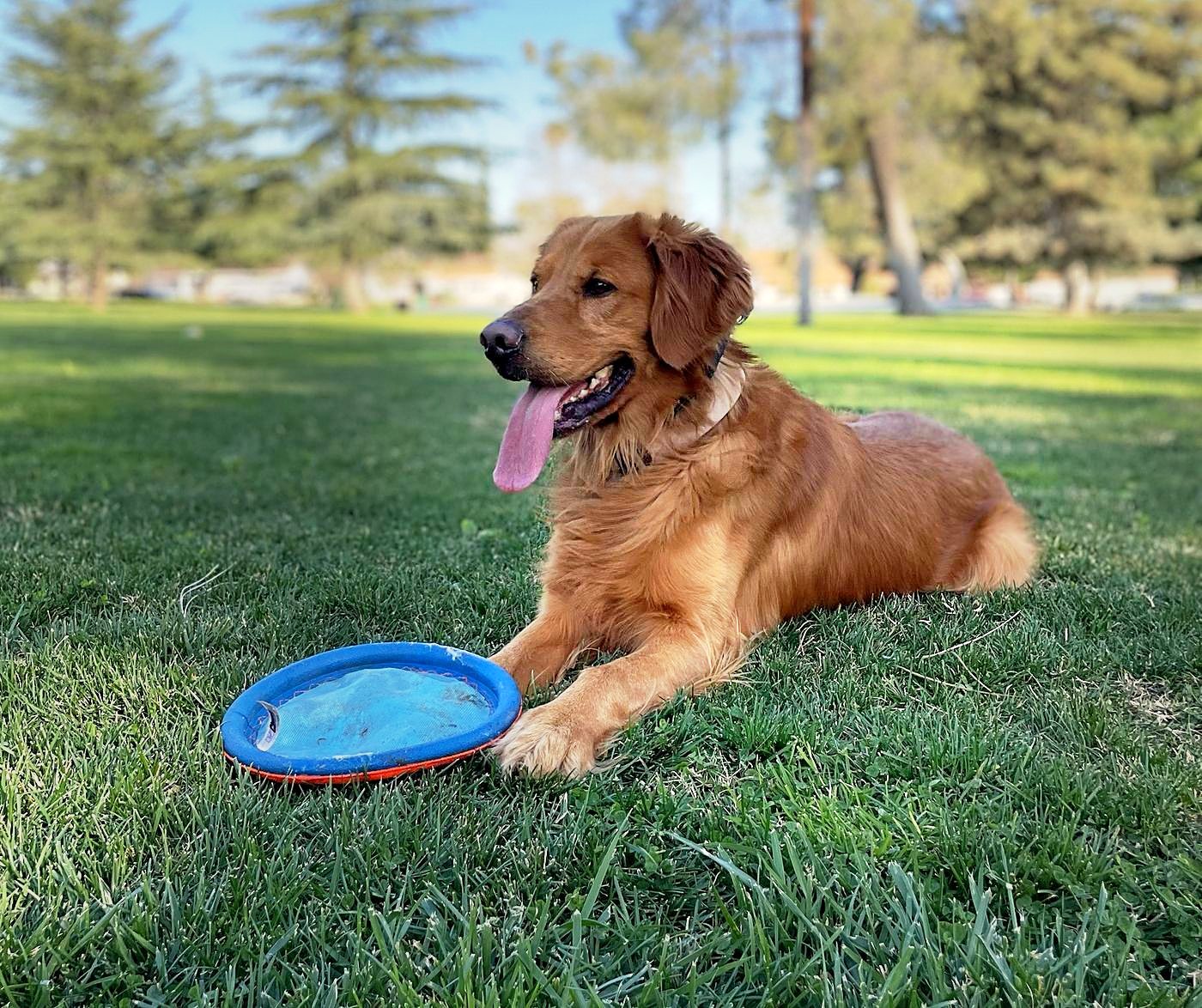
The gray muzzle sneaks up on you. One day your golden takes the stairs a little slower, or sleeps through the doorbell, and you start doing math you’d rather not do.
As one owner put it on r/goldenretrievers, “I would trade a truckload of shedding for another year with my pup.” This guide is about making those years good ones.
What age is a golden retriever considered a senior?
There’s no single birthday. The American Animal Hospital Association (AAHA) defines a senior as a dog in “the last 25% of estimated lifespan through end of life.”
For goldens, the best numbers come from the Golden Retriever Club of America’s health survey: females lived to an average of 11.3 years and males to 10.7. The last quarter of about 11 years starts around age 8, by our math.
VCA Animal Hospitals lands in the same place, putting large dogs like Labradors at senior status around 7 or 8. So 7 to 8 is a good time to start paying closer attention.
One more thing worth knowing: vets are taught that “old age is not a disease.” VCA says many signs people blame on old age are actually medical conditions that can be diagnosed and managed. That’s hopeful news.
How can you tell your golden is getting old?
Some slowing down is normal. But AAHA warns that owners often see chronic pain as normal aging, especially when the changes are subtle.
A simple habit helps here: take short phone videos of your golden getting up, climbing stairs and walking. Both AAHA and VCA say videos help your vet spot changes in movement that don’t show up on the exam table.
What are the most common senior golden retriever health issues?
VCA lists the major problems in older dogs as arthritis, obesity, dental disease, hormone disorders like diabetes, kidney disease, liver disease, heart disease, cancer and cognitive dysfunction. Seniors often have more than one at a time. For the breed-specific issues, see golden retriever health issues: what to watch for (and when to call the vet).
Arthritis and stiffness
VCA says osteoarthritis affects 80% of dogs over eight years old. In goldens, hip and elbow dysplasia can set the stage for it earlier.
Signs to watch for:
-
Trouble getting up or lying down
-
Walking beside or behind you instead of out in front
-
Hesitating before stairs or before jumping on or off furniture
-
Slower walks, or wanting to cut them short
-
Not wanting to be touched in certain spots
-
Shifting weight to one side, or to the front or back
-
New grumpiness toward people or other dogs
Arthritis can’t be cured, but it can be managed, and VCA says dogs with good management can live a normal lifespan. VCA’s own advice is blunt: “Never reach into your own medicine cabinet when your dog limps.” Let your vet build the plan.
Weight and muscle changes
Calorie needs usually drop as dogs age. AAHA says older dogs tend to lose muscle and gain fat, then lose weight overall at a very advanced age.
VCA suggests weighing your dog on the same scale at least every two months, because a change in weight can be an early sign of disease.
Doggy dementia (cognitive dysfunction)
AAHA says about 14% to 22.5% of dogs older than 8 have age-related cognitive decline, and that early treatment works better. Owners often miss the first signs.
Vets use the letters DISHAA to describe them. VCA explains each one:
-
Disorientation: getting lost in familiar places, going to the wrong side of a door, not recognizing familiar people
-
Interactions: becoming more clingy, or pulling away
-
Sleep: sleeping more in the day and pacing at night
-
House soiling and learning: accidents indoors, forgetting cues they used to know
-
Activity: less interest in play, or wandering and pacing
-
Anxiety: new fears, noise phobias, or trouble being left alone
VCA says if your dog shows more than one of these, it’s worth a full checkup. Other problems can look similar (a dog with sore joints may stop getting up to greet you), so your vet will want to rule those out first.
Lumps, bumps and cancer
Cancer is more common in older dogs. AAHA notes that a harmless fatty lump and a cancer like a mast cell tumor can look and feel the same, which makes “watch and see” risky. Vets measure lumps and sample them with a needle.
Our health guide covers the monthly lump check and the warning signs of hemangiosarcoma, a cancer goldens get more often than most breeds.
Noisy breathing or a changed bark
This one’s easy to miss. VCA says golden retrievers are one of the breeds most affected by acquired laryngeal paralysis, where the voice box can’t open fully. It usually shows up in middle-aged or older dogs.
The first sign is often just slowing down, which looks like age. Other signs include noisy breathing, gagging or coughing while eating or drinking, heavy panting, a hoarse or changed bark, and trouble breathing. AAHA adds that it can come with weakness in the back legs, and that these dogs are at risk of heat stroke.
VCA recommends avoiding heat and hard exercise, and using a harness instead of a collar for affected dogs (see best harness for a golden retriever (no-pull picks and sizing)). Blue-tinged gums or collapse is an emergency.
Teeth and gums
VCA calls dental disease one of the most common diseases in dogs, and it’s painful. Lift your golden’s lip now and then to look. Healthy gums are pink and moist.
Cleanings need anesthesia, but AAHA says senior pets can safely have it, even more than once.
How often should a senior golden see the vet?
AAHA’s senior guidelines suggest a medical workup once or twice a year. VCA recommends exams at least twice a year, plus blood, urine and stool tests at least once a year to catch organ changes before your dog shows signs.
Bring your videos and a list of changes. Also tell your vet about every supplement, chew, oil or other product your golden gets. AAHA warns that some “natural” products can interact with medications older dogs often take.
Don’t wait for the next checkup if you notice any of these (from VCA’s list):
-
Drinking or peeing a lot more than usual
-
Weight loss, or a big change in appetite
-
Repeated vomiting, or diarrhea lasting more than three days
-
Trouble peeing or pooping, or accidents in the house
-
A limp that lasts more than a day or two
-
New lumps, open sores or scabs
-
Bad breath, drooling, or trouble chewing dry food
-
A swollen belly
-
A cough that won’t quit, faster or harder breathing, or heavy panting
-
Seizures, sudden collapse or bouts of weakness
Go to your vet or an emergency hospital right away for collapse, trouble breathing or blue-tinged gums.
For more signs sorted by how urgent they are, plus a free one-page chart to print, see our dog symptom guide.
How can you make your home easier for an older golden?
“Should I get her grippy socks???” is a real question one owner asked on r/goldenretrievers, and it’s a good one. AAHA’s senior guidelines actually list toe grips, boots and socks for foot stability.
Small changes from AAHA and VCA that help:
-
Better footing: rugs, runners or yoga mats over slippery floors
-
Ramps or steps: for the car, the couch or your bed
-
Raised bowls: at about elbow height, to ease the joints
-
Water on every floor: and keep an eye on how much they drink
-
A soft, padded bed: somewhere warm and quiet where they won’t be bumped
-
A padded harness: a fitted one can help you lift a big dog
-
Short nails: long nails cut traction and make walking harder. VCA says you shouldn’t hear them clicking on the floor
-
More potty trips: older dogs often need to go out more often
-
Light and safety: extra lighting helps dogs with fading vision, and watch for hazards like stairs and pools
VCA also says older dogs don’t handle change well. Keep routines steady, and if you travel, consider a pet sitter, or send familiar bedding and toys if they board.
How much exercise does a senior golden retriever need?
There’s no set number of minutes, and it depends on your dog’s health. VCA says senior pets should stick to walking, swimming and other low-impact exercise.
Keep the walks going. VCA says regular walks give mental stimulation and one-on-one time, and suggests tracking how long your dog can comfortably walk. A big drop could be a sign of pain, heart disease or another illness.
Before starting anything new, get a vet check. Warm up with a slow walk and cool down the same way. Go easy in hot weather.
If arthritis is slowing your golden down, ask about physical rehabilitation. AAHA says rehab, including exercise therapy and hydrotherapy, can ease pain and improve mobility and balance.
Should you switch your golden to senior dog food?
Not automatically. AAHA points out that AAFCO, whose nutrient profiles pet food labels follow, has no separate guidelines for senior nutrition. “Senior” on a bag isn’t a set standard.
What AAHA does say about older dogs:
-
They generally need fewer calories, less calorie-dense food and more fiber
-
A mild increase in protein may help make up for muscle loss
-
An ideal body condition score is 4.5 to 5 out of 9, and calorie-restricted diets have been shown to help dogs live longer
-
In one study, adding moisture to food helped senior dogs digest nutrients better
Some older dogs need to lose weight, while others have kidney disease or diabetes that calls for a special diet, so VCA says to choose food with your vet. If you have other pets, make sure they’re not crowding your senior away from the bowls. For portions, see how much to feed a golden retriever by age (puppy to senior).
How do you keep an older golden’s mind sharp?
Old dogs really can learn new tricks. VCA suggests daily play plus a few easy brain games:
-
Hide and seek: two people at opposite ends of the house take turns calling your dog, with a treat for each find
-
Hand signals: teach them while your dog’s eyesight is good. They help a lot if hearing fades
-
Sniff games: puzzle toys, or snacks hidden around a room
-
Old tricks: practice them every day
Just make sure your golden is having fun. VCA also suggests regular brushing or a gentle massage, since arthritis can make some spots hard for your dog to reach. It’s also a quiet way to spend time together (see how often should you brush a golden retriever? (and how to do it right)).
How do you judge your senior golden’s quality of life?
This is the hardest part of loving an old dog. “Anticipatory grief sucks a lot,” one owner wrote on r/goldenretrievers. If you’re there, you’re not alone. AAHA’s senior guidelines use the same words and ask vet teams to be ready to support families through it.
A few tools can help you see things more clearly:
-
The HHHHHMM scale: created by veterinary oncologist Dr. Alice Villalobos. It covers Hurt, Hunger, Hydration, Hygiene, Happiness, Mobility, and More good days than bad. She suggests scoring each from 1 to 10, and wrote that “a score above five on most of these issues is acceptable.” A 2023 study of 314 owners in Italy found it a reliable tool.
-
A good day, bad day calendar: AAHA suggests marking each day on a calendar or in a journal to get a more accurate view of changes over time.
AAHA also cautions that very few quality-of-life scales are validated, and most you’ll find online aren’t. Use them to start a conversation with your vet, not to make the decision alone.
If your golden has a long-term or terminal illness, ask about palliative care: pain and symptom control that can run alongside treatment. Hospice is its final stage, with a daily care plan, a crisis plan and a plan for the end, including home euthanasia, which AAHA says is more widely available now.
AAHA tells vets a first end-of-life planning visit can take up to three hours, so it’s okay to ask for the time you need. Caring for an old dog takes a real toll on people too, and AAHA says the plan should work within your limits. If your dog is pacing all night, fixing sleep may matter most right now.
Where can you find support when you’re grieving?
Cornell’s veterinary college says grief can begin before, during or after a death, and that there’s no “normal” way to grieve a pet and no set timeline.
Two free support lines are run by veterinary school volunteers trained by grief counselors:
-
Cornell University Pet Loss Support Hotline: 607-218-7457 (hours change with the seasons, so call for current hours)
-
Tufts University Pet Loss Support Hotline: 508-839-7966, Monday to Thursday, 6 to 9 p.m. Eastern, with 24-hour voicemail
You don’t have to wait until the end to call.
Get the free Golden Puppy 90-Day Plan: a shopping list, a daily schedule at 8, 10 and 12 weeks, and a week-by-week checklist, for you or anyone you know bringing home a new golden.
FAQs
How old is a senior golden retriever?
Around 8 years old. AAHA defines a senior as a dog in the last 25% of its expected lifespan, and goldens in the breed club’s survey lived about 11 years on average.
Is 10 old for a golden retriever?
Yes. In the breed club’s survey, the average age at death was 10.7 for males and 11.3 for females, so a 10-year-old golden is well into the senior years. Plenty of goldens live longer, and regular vet care helps.
Do senior goldens need senior dog food?
Not necessarily. There’s no official senior food standard, and older dogs’ needs vary a lot. Ask your vet whether your golden needs fewer calories, more fiber or a special diet.
Bottom line
Your golden is a senior at around 8. From there, book checkups once or twice a year, watch for stiffness, weight changes and the DISHAA signs, and make your home easier to get around. When the hard questions come, lean on your vet and the tools above, and check with your vet about anything that worries you.
Sources
-
AAHA, 2023 Senior Care Guidelines for Dogs and Cats: https://www.aaha.org/resources/2023-aaha-senior-care-guidelines-for-dogs-and-cats/
-
AAHA, 2023 Senior Care Guidelines, executive summary: https://www.aaha.org/trends-magazine/february-2023/gl-senior-care-feb23/
-
AAHA, Defining the Senior Patient: https://www.aaha.org/resources/2023-aaha-senior-care-guidelines-for-dogs-and-cats/defining-the-senior-patient/
-
AAHA, Evaluating the Healthy Senior Pet: https://www.aaha.org/resources/2023-aaha-senior-care-guidelines-for-dogs-and-cats/evaluating-the-healthy-senior-pet/
-
AAHA, Pain Management: https://www.aaha.org/resources/2023-aaha-senior-care-guidelines-for-dogs-and-cats/pain-management/
-
AAHA, Nutrition: https://www.aaha.org/resources/2023-aaha-senior-care-guidelines-for-dogs-and-cats/nutrition/
-
AAHA, Managing Cognitive Dysfunction and Behavioral Anxiety: https://www.aaha.org/resources/2023-aaha-senior-care-guidelines-for-dogs-and-cats/managing-cognitive-dysfunction-and-behavioral-anxiety/
-
AAHA, Special Disease Consideration: GOLPP Complex: https://www.aaha.org/resources/2023-aaha-senior-care-guidelines-for-dogs-and-cats/special-disease-consideration-golpp-complex/
-
AAHA, Tools for End-of-Life Care: https://www.aaha.org/resources/2023-aaha-senior-care-guidelines-for-dogs-and-cats/tools-for-end-of-life-care/
-
AAHA, Palliative Care or Hospice: https://www.aaha.org/resources/2023-aaha-senior-care-guidelines-for-dogs-and-cats/palliative-care-or-hospice/
-
AAHA, Managing the Caregiver Burden: https://www.aaha.org/resources/2023-aaha-senior-care-guidelines-for-dogs-and-cats/managing-the-caregiver-burden/
-
Glickman, Glickman and Thorpe (Purdue University), Golden Retriever Club of America National Health Survey 1998-1999: https://www.grca.org/wp-content/uploads/2015/08/healthsurvey.pdf
-
VCA Animal Hospitals, Senior Dog Care: Special Considerations: https://vcahospitals.com/know-your-pet/senior-dog-care-special-considerations-for-dogs
-
VCA Animal Hospitals, Helping Our Senior Dogs Age Gracefully: https://vcahospitals.com/know-your-pet/helping-our-senior-dogs-age-gracefully
-
VCA Animal Hospitals, Arthritis in Dogs: https://vcahospitals.com/know-your-pet/arthritis-in-dogs
-
VCA Animal Hospitals, Five Signs Your Pet Has Osteoarthritis: https://vcahospitals.com/resources/conditions/five-signs-your-pet-has-osteoarthritis
-
VCA Animal Hospitals, Behavior Counseling: Senior Pet Cognitive Dysfunction: https://vcahospitals.com/know-your-pet/behavior-counseling-senior-pet-cognitive-dysfunction
-
VCA Animal Hospitals, Laryngeal Paralysis in Dogs: https://vcahospitals.com/know-your-pet/laryngeal-paralysis-in-dogs
-
VCA Animal Hospitals, How to Customize Your Pet’s Exercise Plan: https://vcahospitals.com/resources/preventive-dog/weight-exercise/how-to-customize-your-pet-s-exercise-plan
-
VCA Animal Hospitals, Senior Dog Agility: https://vcahospitals.com/know-your-pet/senior-dog-agility
-
Alice Villalobos, DVM, “Quality of Life Scale Helps Make Final Call,” Veterinary Practice News: https://www.veterinarypracticenews.com/quality-of-life-scale-helps-make-final-call/
-
Testoni et al., “Validation of the HHHHHMM Scale in the Italian Context: Assessing Pets’ Quality of Life and Qualitatively Exploring Owners’ Grief,” Animals (2023): https://pmc.ncbi.nlm.nih.gov/articles/PMC10044252/
-
Cornell University College of Veterinary Medicine, Pet Loss Resources and Support: https://www.vet.cornell.edu/about-us/outreach/pet-loss-support-hotline
-
Owner quote, r/goldenretrievers (“I would trade a truckload of shedding for another year with my pup.”): https://www.reddit.com/r/goldenretrievers/comments/1ptzijh/_/nvkqx8p/
-
Owner quote, r/goldenretrievers (“Should I get her grippy socks???”): https://redd.it/1o2k479
-
Owner quote, r/goldenretrievers (“Anticipatory grief sucks a lot”): https://redd.it/1qlnqwk